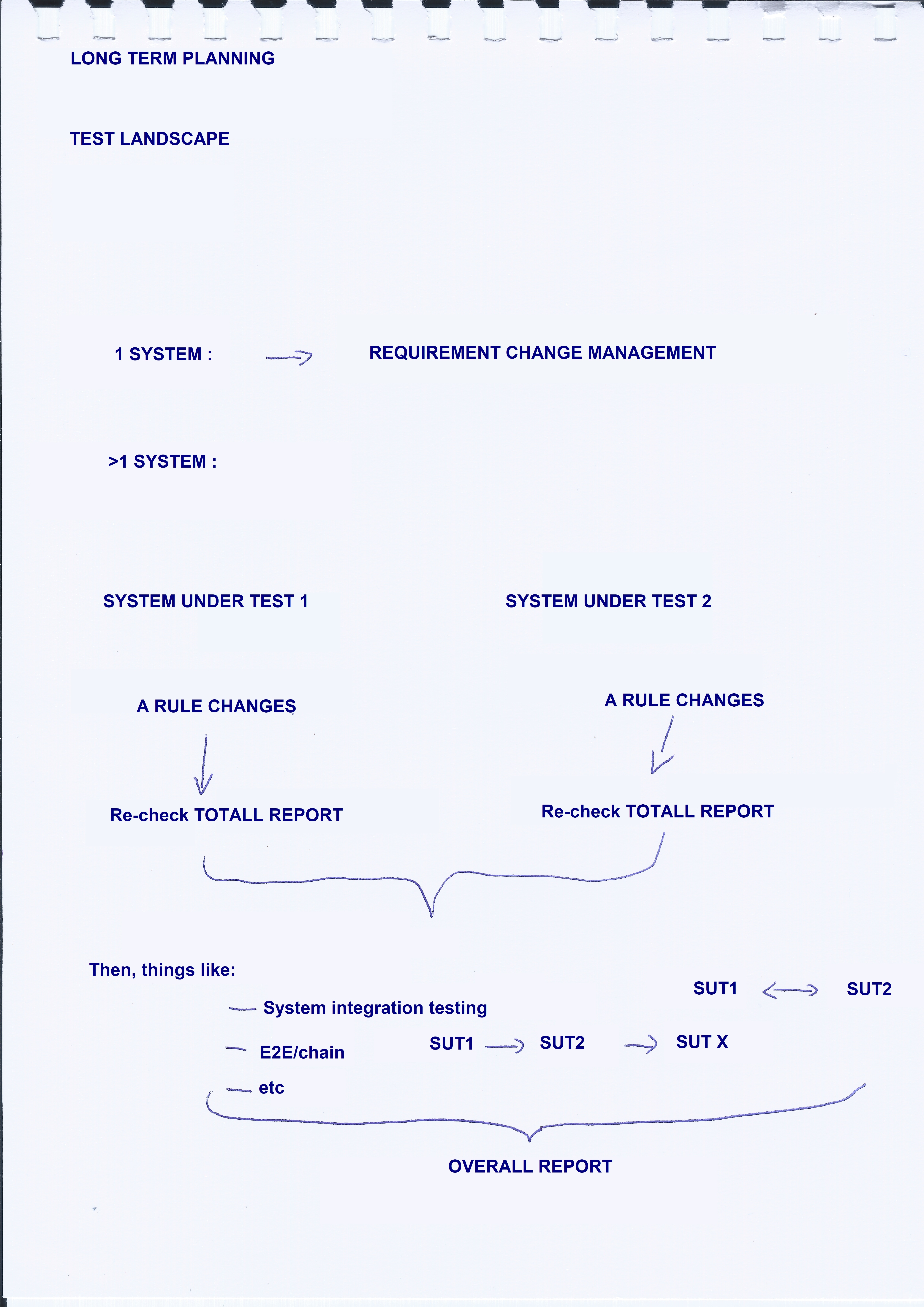
 You made it through, welcome to the juicy part!
Interpreting the short-term Diagram
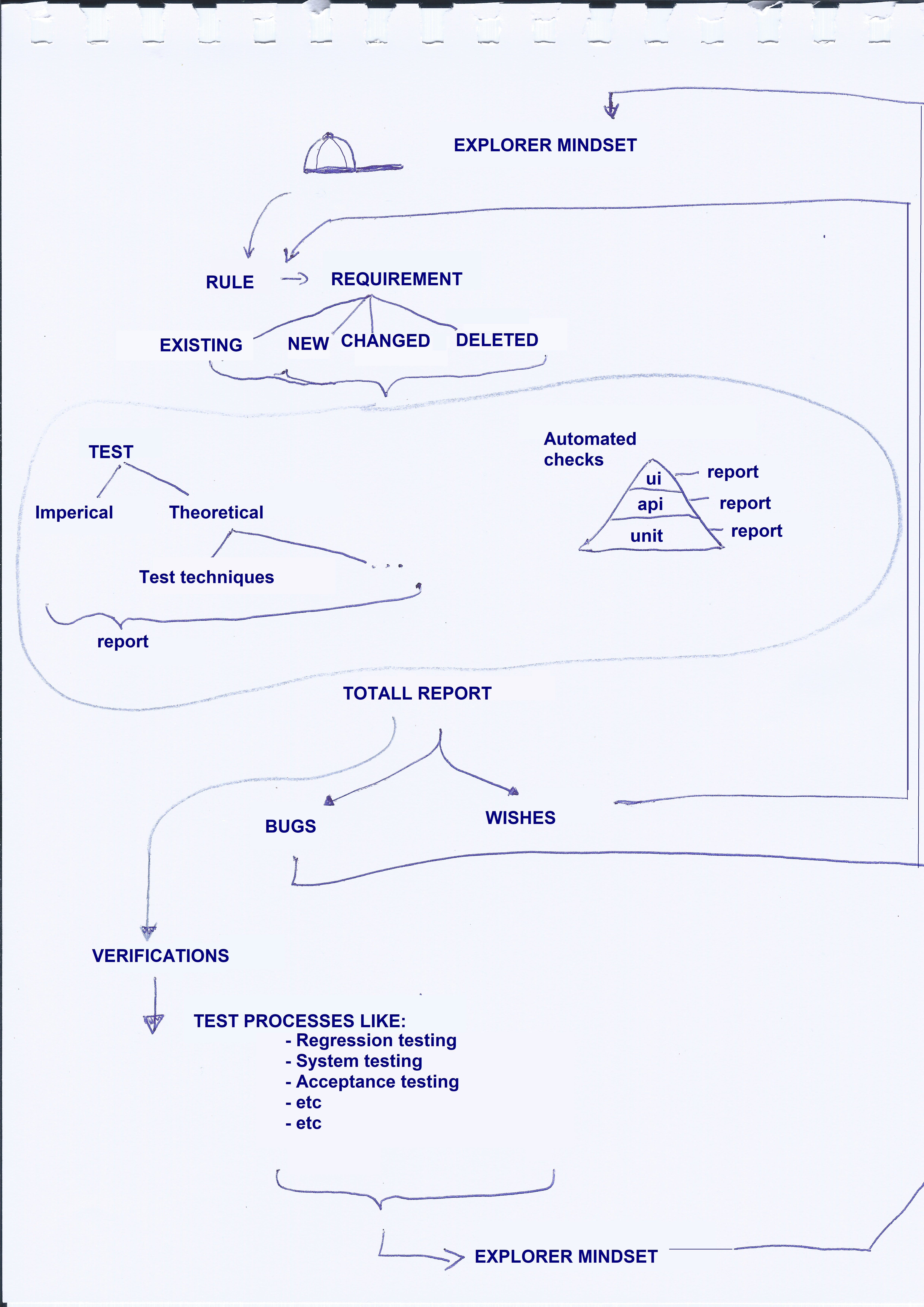
As established in previous sections, all testing activities are fundamentally based on requirements—whether they are pre-existing, new, modified, or obsolete.
The section below this illustrates the available verification methodologies, which can be either empirical or theoretical.
An effective testing strategy incorporates a suitable level of automated checks while reserving adequate time for genuine exploratory testing. Achieving this balance is contingent upon meticulous planning, which ensures that sufficient time is allocated to high-value testing activities.
It's important to aim for the TOTALL REPORT, but what's difficult in testing is the moment you want to be able to present such a totall test report. Talk about this with your team members! Plan it.
Which rules are going to be tested more, and which rules are going to be tested less is based on RISK